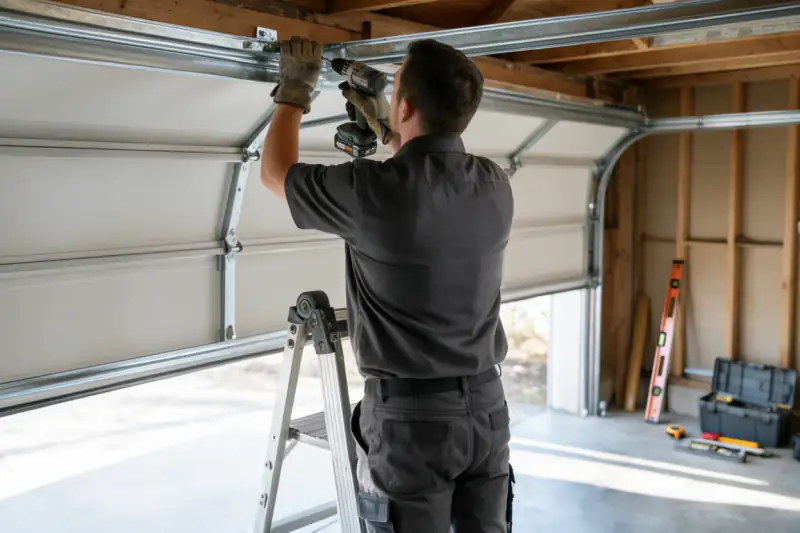
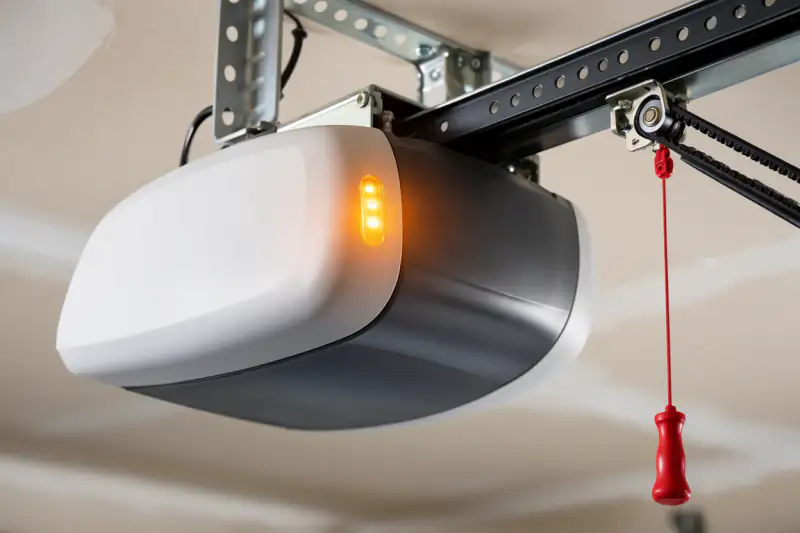
We add electric openers and remote control to manual garage doors across Newcastle upon Tyne and the North East. We convert up-and-over, sectional and side-hinged doors, as long as the door itself still runs well.
What our door conversion service involves
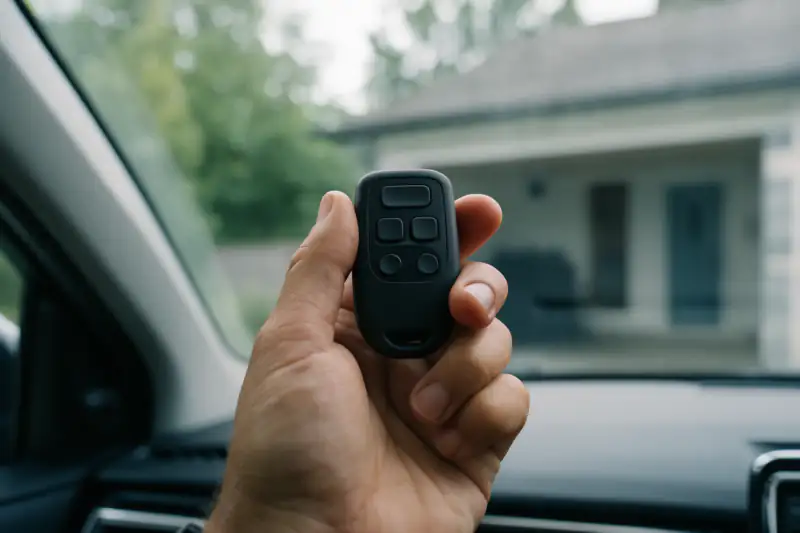
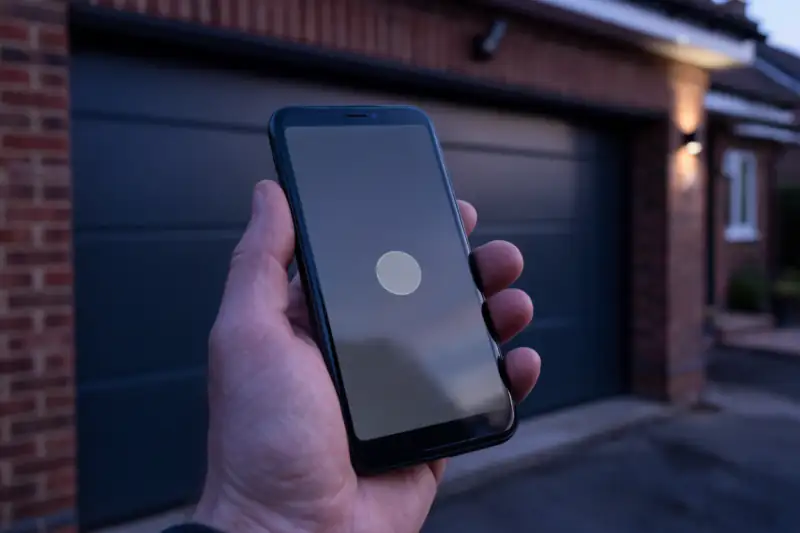
A conversion includes the motor with its rail or drive arms, the remotes, and any adaptor your door needs. We set the open and closed positions, pair the handsets and set up the safety features. Phone control and battery backup can be added in the same visit.
Start with the quote form at the top of this page, or email info@remotegaragedoor.co.uk. Tell us the door type, what sits above and beside the garage, and where your nearest socket is. Photos taken from inside, showing the tracks and the space above the door, help most. From those we can usually see how your door will convert and which drive suits it, and we set that out in a written quote.
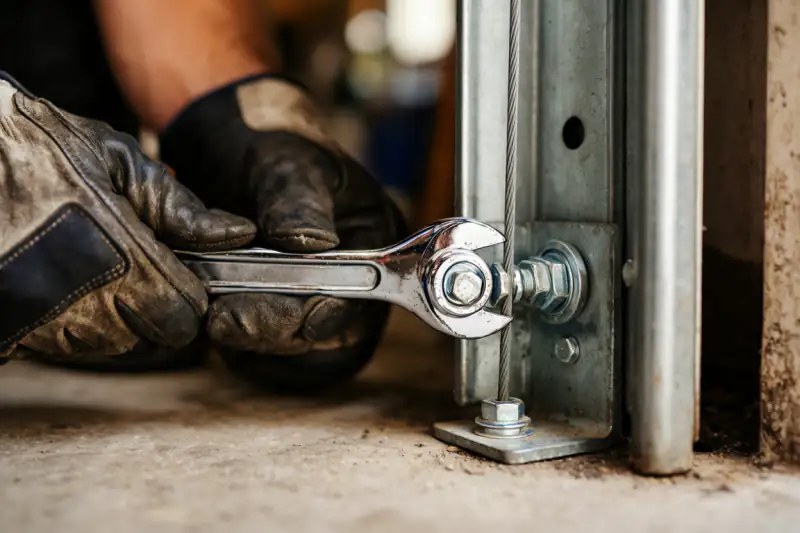
If the door is too worn to be worth a motor, we will tell you that rather than fit a kit to it. Once the motor is in, we test the force limits and obstacle detection, explain what happens to the old lock, and show you how the manual release works.
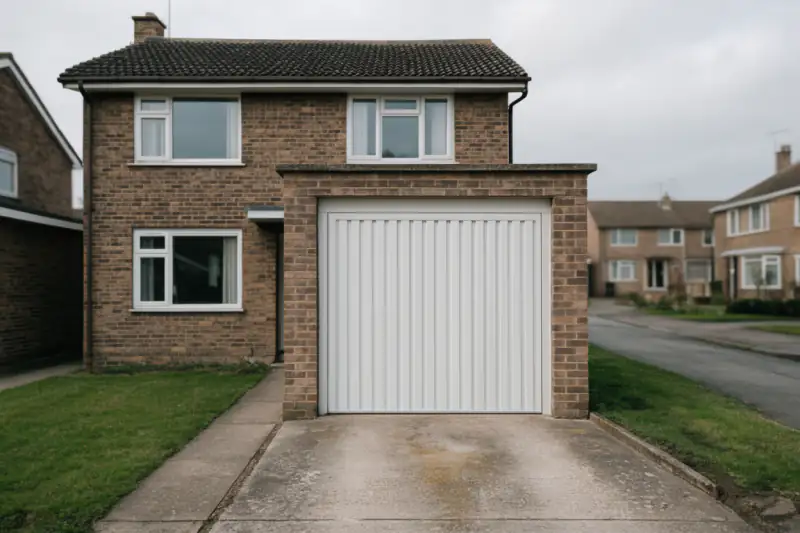
Will your door take a motor?
Before you send anything, test the door by hand, because a motor only moves a door and cannot cure one. If it is stiff or out of balance, the motor strains and the safety systems may keep tripping.
- Undo the lock and lift the door by hand, all the way up.
- Feel for sticking, scraping or a sudden heavy patch.
- Stop about halfway and carefully let go, keeping your hands ready and your feet clear.
- Close it again and look at how squarely it sits in the frame.
A good candidate moves evenly and stays roughly where you leave it. If it crashes down or flies up, the springs may need attention. Do not adjust them yourself, as they are under high tension. Book a repair first, then think about the motor.
How each type of door converts
The work varies with the way your door opens. Open it and look inside. If the door rests on long horizontal tracks it is a retractable. If part of it hangs outside and there are no long tracks, it is a canopy.
| Your door | How it converts |
|---|---|
| Up-and-over retractable | Normally straightforward |
| Up-and-over canopy | Usually needs an adaptor on the door |
| Sectional | Normally straightforward |
| Side-hinged | Needs a dedicated kit, and the doors must be strong, square and free-swinging |
You also need room above the door for the motor and its rail. In most garages this is not a problem, but a low ceiling or a beam in the way is one of the first things we check.
What automation typically costs
For a single up-and-over door, the usual guide figure is £300 to £600 fitted, or £250 to £400 for the kit alone. These are typical 2026 UK figures and not our price list. Sectional and side-hinged conversions depend much more on the door, so we would need details before suggesting a figure.
The motor you choose makes the biggest difference to the total. A new socket, if you need one, is typically £80 to £150, and battery backup typically £50 to £120. Running costs are small, at under £25 a year for most households. Our price guide compares these with buying a new door.
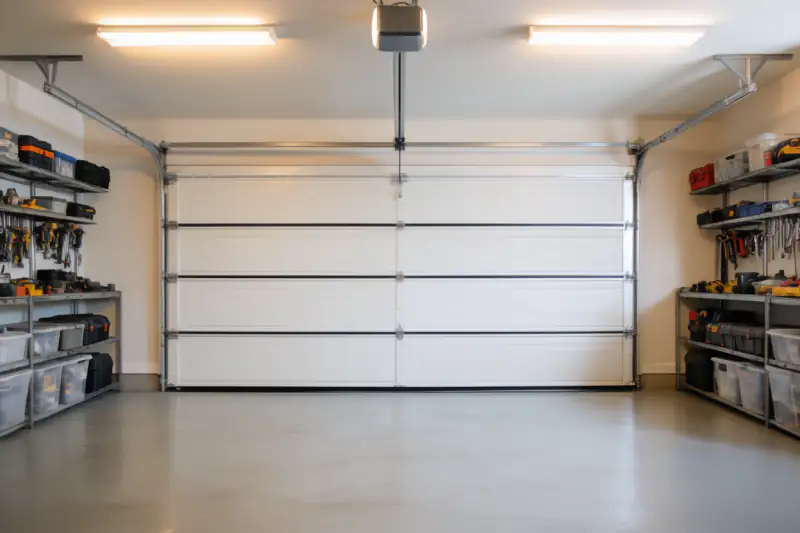
Chain, belt or direct drive?
The main difference is noise, and that matters most where people sleep or sit close to the garage. A motor is heard through the wall far more than it is heard on the drive.
| Drive | Noise | Typical guide price | Good for |
|---|---|---|---|
| Chain | Louder | £250 to £400 | Detached garages and value installs |
| Belt | Quiet | £350 to £550 | Attached garages and rooms above |
| Direct | Very quiet | £500 to £800 | Places where the quietest running matters most |
For a garage at the end of the garden, a chain drive will usually do everything you need. That is often the case with the older up-and-over garage doors we convert, while a bedroom over the door would normally lead us to look at belt first.
What happens to the old lock and handle?
The motor normally holds the door shut once it has closed, so the old lock is often disabled. That stops anyone turning the key and then pressing the remote, which would have the motor pulling against a locked door. The strength of that hold varies between openers, so it is worth asking about. Our guide on how secure electric doors are covers this properly.
What if there is no power, or it goes off?
An attached or integral garage often has a socket already, or one nearby. A detached garage at the rear of a property may have no supply at all, and a qualified electrician needs to sort that first. Some low-voltage and solar options exist, but mains is generally more dependable.
In a power cut, your door will still open. A manual release disconnects the motor so you can move the door by hand. The catch is that the release is usually inside the garage. If you have no other way in, an external release or a battery backup solves the problem, so mention it when you ask for a quote.
When a new door is the better buy
Automation stops being good value once the door is near the end of its life. If the steel is rusting through or the tracks are damaged, a motor will only make the problems worse. It is also worth a rethink if the door swings out over a short drive, or lets cold into an attached garage, because a motor changes neither of those. In either case, a new electric door may serve you better in the long run.
If your door passed the hand test, you are most of the way there. Use the quote form at the top of this page to send us the door type, a couple of photos and where your nearest socket is, and we will give you a clear answer.