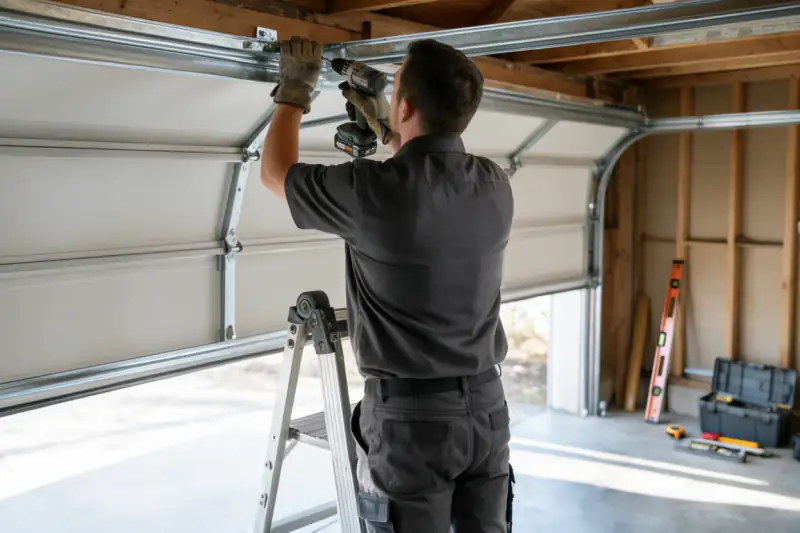
We repair electric garage doors across Newcastle upon Tyne and the North East. That covers motors, openers and receivers, photocells and safety edges, and the springs, cables and tracks that carry the door's weight.
How we handle a repair
A repair covers finding the fault, putting it right and checking the door afterwards. That might mean realigning photocells, adjusting a force setting, replacing a worn drive or gear, or dealing with a failed spring, cable or track.
Start by describing the fault in the quote form at the top of this page, or email info@remotegaragedoor.co.uk. Tell us the door type, the make of the opener, what the door is doing and when the trouble began. A short video of the door trying to move is often the most helpful thing you can send, provided it is safe to run it. We use those details to narrow down the likely cause and the parts involved, then send you a written quote.
We will also tell you honestly whether the door is worth repairing. Often a single part is all it needs. Where a new motor or a new door makes more sense, we give you both options. After any repair, we test the photocells, force limits and manual release before we leave.
Signs you should stop using the door
A few symptoms mean something that holds the door's weight may have failed. Pressing the remote again can make that worse, and a heavy door can drop without warning.
- A loud bang from the garage, followed by a door that will not lift
- One side sitting lower than the other
- A cable that is frayed, slack or hanging loose
- A door that has come out of its track
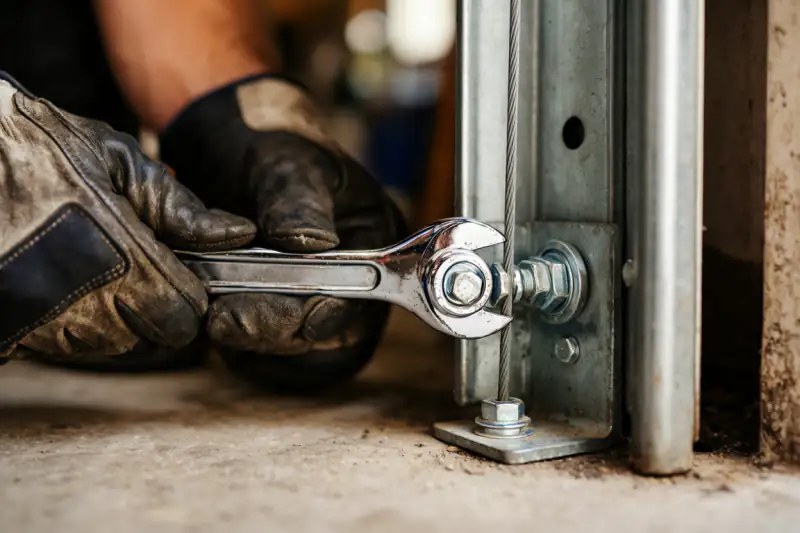
Springs and cables carry the door's weight under high tension, and a sudden release can cause serious injury. These are not DIY jobs, however simple they look in an online video. Keep children and pets out of the garage and send us the details.
What the symptoms usually mean
With the serious warning signs ruled out, it helps to match what you are seeing to the likely cause. These are the faults we see most.
The door closes, then goes back up
This usually means the opener believes something is in the way, which is the safety system doing its job. Blocked or misaligned photocells are the common cause. If those are clear, the force setting may need attention, or the door may have grown stiff enough for the motor to mistake the extra effort for an obstacle.
The motor runs but the door stays still
Sometimes the manual release has been pulled and the door is disconnected. If not, we would look for a worn drive or a failed gear inside the motor.
Nothing happens at all
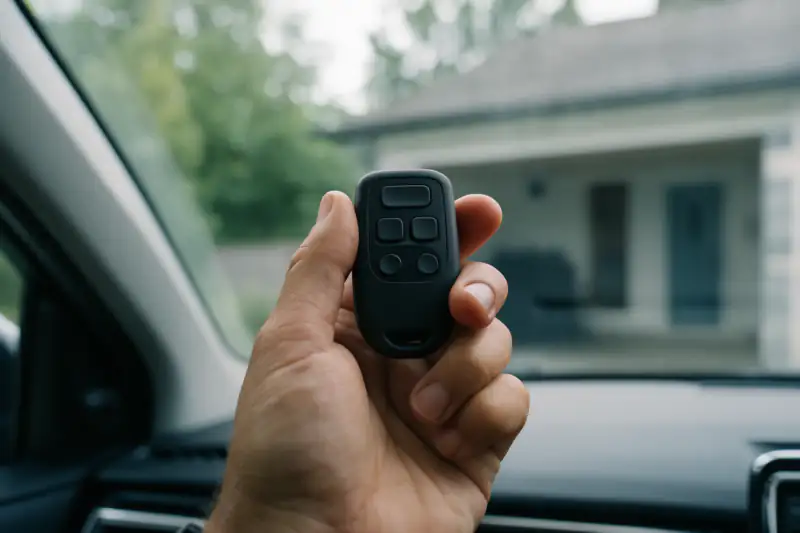
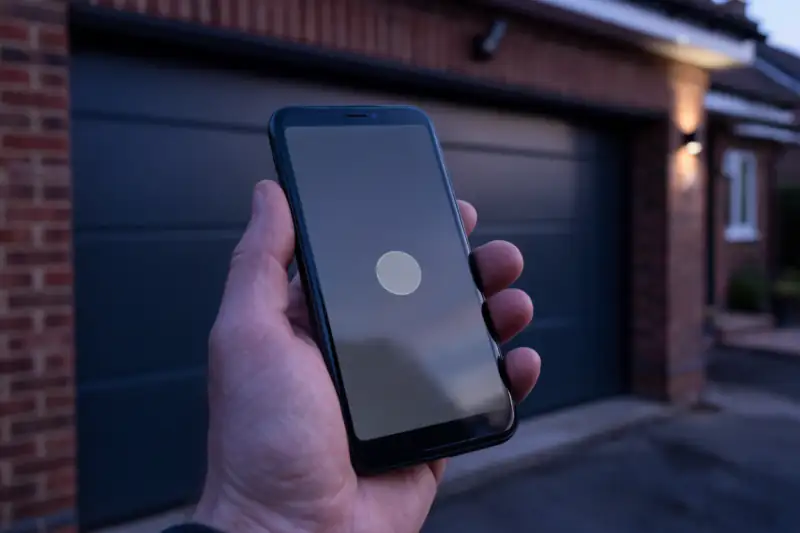
We work through this in order: power, remote, receiver and then the control board. The wall button is a useful clue. If it works but the handset does not, the trouble is on the radio side, and our remote replacement page is the better place to start.
The door stops short or sticks part-way
This often points to a mechanical problem rather than an electrical one. A failed spring, a slack cable or a dented track can each leave the door binding at the same spot, and the opener may stop or reverse when it senses the resistance.
It has become noisy or jerky
Grinding, juddering or a new rattle is an early warning that a part is wearing, and it is much better to look at it now than after it fails. Note when the noise happens, and whether it comes from the motor or from the door.
Checks that are safe to try first
You can sort out some faults without tools or ladders, and these checks also tell us a great deal. Stick to this list, and stop if anything feels wrong.
- Confirm the socket and fuse are live, using a lamp if you have one handy.
- Check the area under the door for anything blocking the opening.
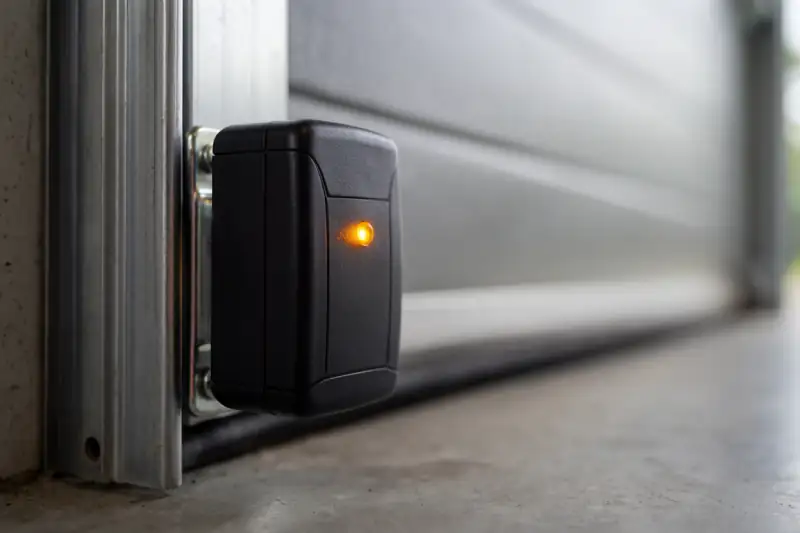
- Wipe both photocell lenses with a soft cloth.
- See that the two photocells face each other, as a knock from a bin or bike can move them.
- Try the wall button as well as the remote, and note the difference.
- Look for any warning light on the motor, and count the flashes if it blinks.
Flash patterns mean different things on different makes, so your manual is the best guide. Even without one, the count is useful to pass on to us. Our answers to common garage door questions also cover a few faults that are easy to rule out at home.
Getting your car out of a stuck garage
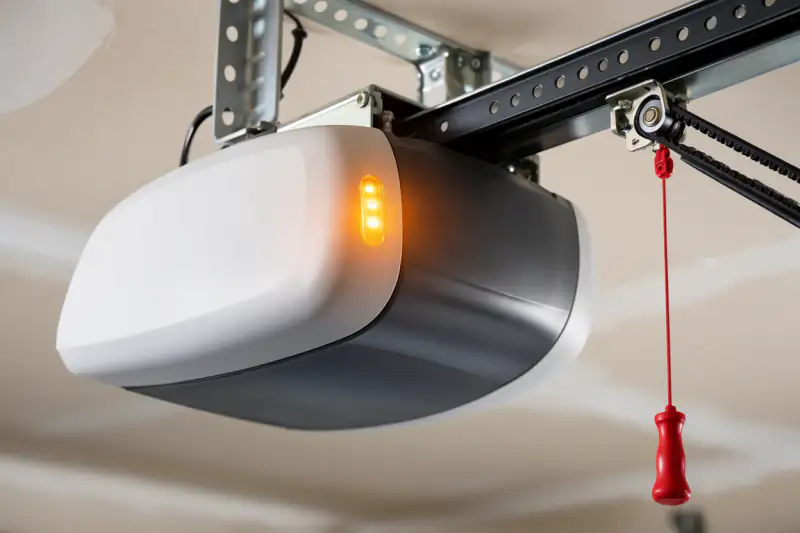
If the door is level and the fault seems to be electrical, the manual release should let you open it by hand. Pull the cord or lever, which is usually red, with the door closed if you can. The door can feel much heavier than you expect, so have a second person with you.
If you suspect a broken spring, leave the release alone. Once it is disconnected from the motor, the door has nothing holding it, and a partly open door can fall if its springs are weak. In that case it is safer to leave the car where it is until the door has been seen. Our manual release guide has more detail on doing this properly.
Is it worth repairing, or time to replace?
A repair usually makes sense when the door itself is sound and the fault is a single worn or failed part. The answer changes as the door and opener get older. Spares can be hard to find for an older opener, and a badly rusted door will keep causing faults whatever you repair. If you have had several faults in a row, that usually points to wear across the whole system.
Where a motor has failed but the door is good, a new motor may be all you need. Typical 2026 UK guide prices are £250 to £400 for chain, £350 to £550 for belt and £500 to £800 for direct drive, and they are not our price list. If the door has reached the end of its life, our price guide shows what a replacement typically costs.
Most faults have an ordinary cause, and getting one looked at early tends to keep the repair simple. Describe what your door is doing in the quote form at the top of the page, add your photos or video, and we will tell you what we think is wrong and what putting it right is likely to involve.