
The best electric garage door is the one that suits your opening and your drive, and also the way you use the space inside. For most homes, the choice comes down to two questions. Do you have room for a door to swing out, and do you want to keep the ceiling free? Once you know the answers, you can usually rule out half the options.
How the main door types compare
Here are the four main types side by side. Prices are typical 2026 UK guide figures for a single garage, fitted, and they are not our price list.
| Door | How it opens | Drive space | Ceiling space | Typical guide price | Best for |
|---|---|---|---|---|---|
| Roller | Straight up into a box | None | Stays free | £900 to £2,000 new | Short drives and overhead storage |
| Sectional | Up, then back along the ceiling | None | Used by tracks | £1,200 to £3,000 new | Insulation and wide openings |
| Up-and-over | Tilts out, then up | Some | Partly used | £300 to £600 to automate an existing door | Sound doors that only need a motor |
| Side-hinged | Outwards like gates | Room for each leaf | Stays free | £1,500 to £3,500 new | Period homes and workshops |
Exact clearances depend on the door and the opener, so treat the table as a starting point. We confirm the details when we check your opening.
Why roller doors suit tight spaces
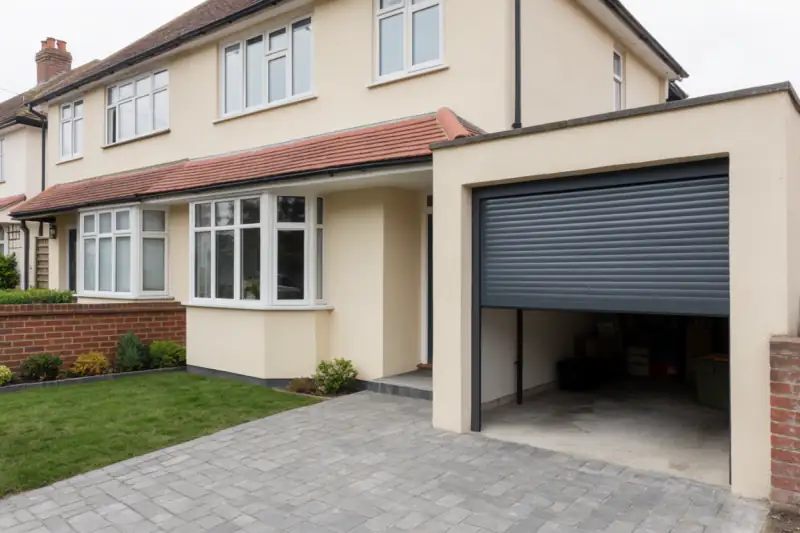
A roller garage door is usually the answer for a short drive or a garage where you store things overhead. The curtain rolls into a box above the opening, so nothing swings out and you can pull up close before it opens.
Most are aluminium slats, often with foam insulation inside, and they are made to measure. They are usually fitted behind or within the opening. That makes them useful for curved or awkward openings where tracks are difficult to fit.
The box does need room above the opening, and the amount depends on the height of the door. It is one of the first things we check, particularly in an older garage with a low lintel.
Sectional doors for warmth and wide openings
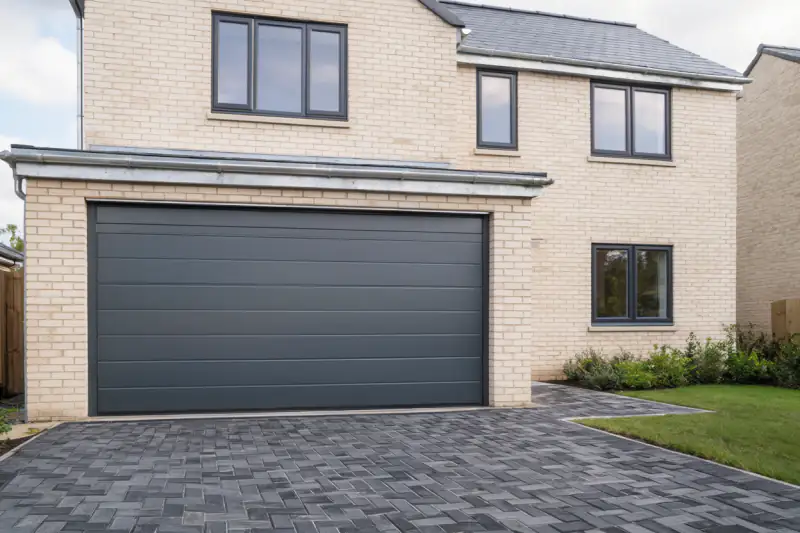
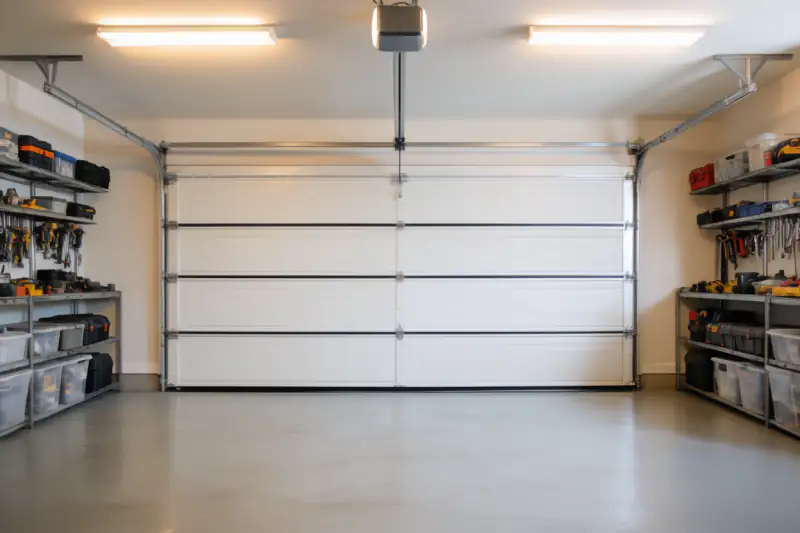
A sectional garage door is often the first choice for an attached garage or a wide double opening. It rises vertically before turning along the ceiling, so you can park right up to it. The panels are usually double-skinned and insulated, with rubber seals at each joint.
That sealing is the main reason people choose one, and the range of panel styles comes a close second. The trade-off is overhead storage. The ceiling tracks use the space above the car, so you lose the spot where the roof box or ladders might have gone.
Roller or sectional?
Neither is better in every garage. If you want the ceiling free or have an awkward opening, lean towards a roller. If the garage is attached or the opening is wide, lean towards a sectional. Our roller vs sectional comparison goes through it in more detail.
Is your up-and-over door worth keeping?
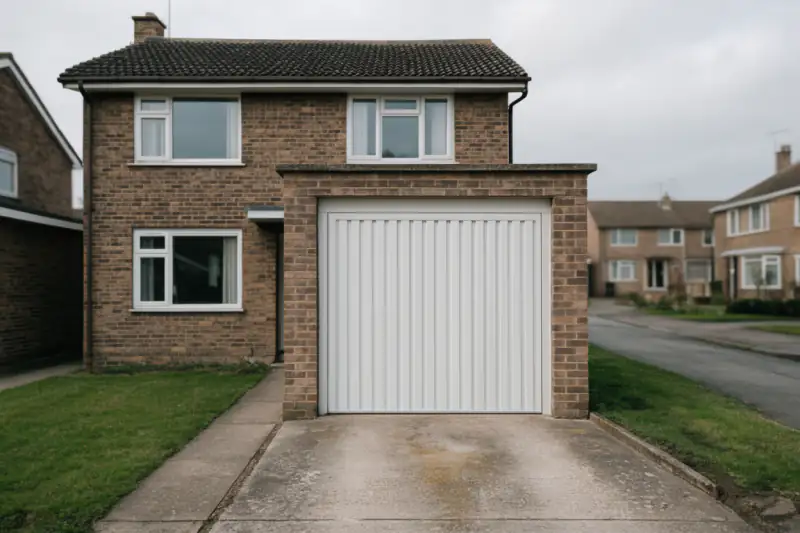
If you already have an up-and-over door in good condition, the cheapest upgrade is usually a motor. This classic one-piece door is on many UK homes, and up-and-over doors are generally simple to automate. Our guide to fitting a motor to the door you already have covers the checks we make first. You do need to allow for the door swinging out as it opens, so a short drive can be a nuisance.
Canopy or retractable?
Open the door and look at it from the side. A retractable door sits on horizontal tracks inside the garage. A canopy door pivots on arms, and part of it stays outside the opening like a canopy when open. Retractable doors tend to take an opener most easily, while canopy doors usually need an adaptor.
Side-hinged doors on period homes and workshops
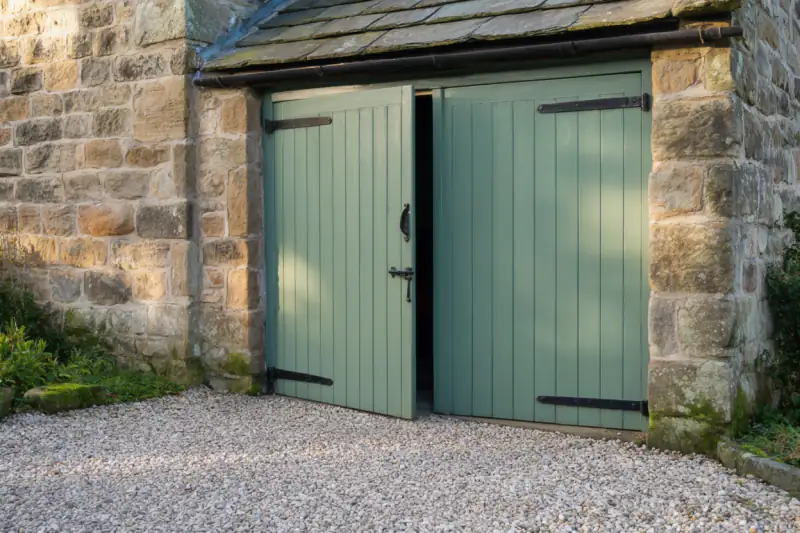
Side-hinged garage doors are the natural choice for period homes and for garages used as workshops. They open outwards like a pair of gates, in timber, steel or GRP, and they leave the ceiling completely clear. You can open one leaf to fetch a bike without opening the whole garage.
They are the most involved type to automate, because each leaf has to be driven. That is why they generally cost the most. Each leaf also needs clear space on the drive to swing through, and an existing pair must be strong, square and able to swing freely before a kit will work.
Do you need an insulated door?
Insulation is worth paying for if the garage shares a wall with your home, sits under a bedroom or doubles as a gym or workshop. Foam-filled panels and curtains reduce heat loss through the door, and better seals cut draughts along the bottom and sides. They also make the garage quieter.
A double-skinned sectional door is typically the strongest performer, and a foam-filled roller is a good option where ceiling space matters. For a detached garage used only for parking, the extra spend may matter less. Remember that the walls and roof count as well. Our page on insulated garage doors explains where it makes the biggest difference.
What to check before you choose
A few minutes with a tape measure will tell you a lot. These are the things that decide which door will work, and they are the details we will want to know.
- The width and height of the opening, because many doors are made to measure.
- The headroom above the opening, for a roller box or sectional tracks.
- The side room on each side of the opening.
- The length of the drive, and any slope towards the garage.
- Where the nearest socket is, as the opener needs power close by.
- Whether the garage is attached to the house, or has a bedroom above it.
A door that swings out may catch on a drive that slopes up to the garage. A door that lifts vertically is often the safer pick there. A bedroom above points towards a quieter belt or direct drive motor, whichever door you choose.
Once you have those measurements, you are most of the way to a decision. Put them in the quote form at the top of this page, along with a photo of the garage if you can. We will tell you which doors fit your opening and which of them make the most sense for how you use it.