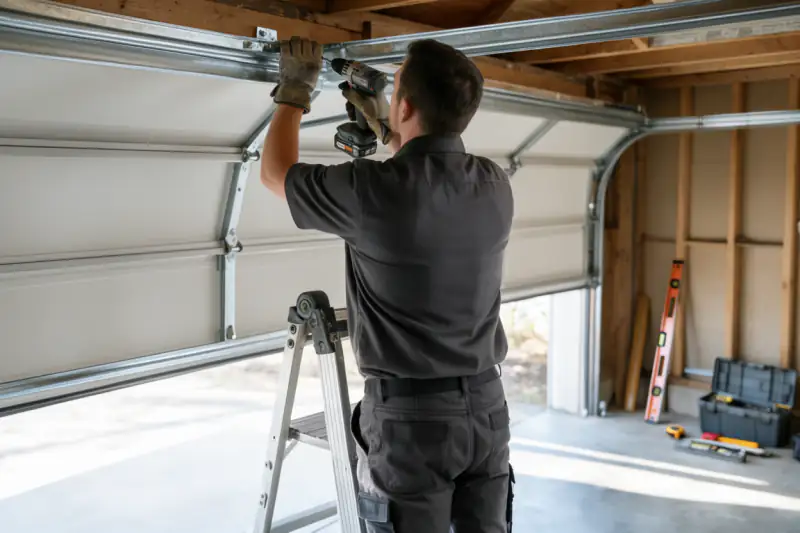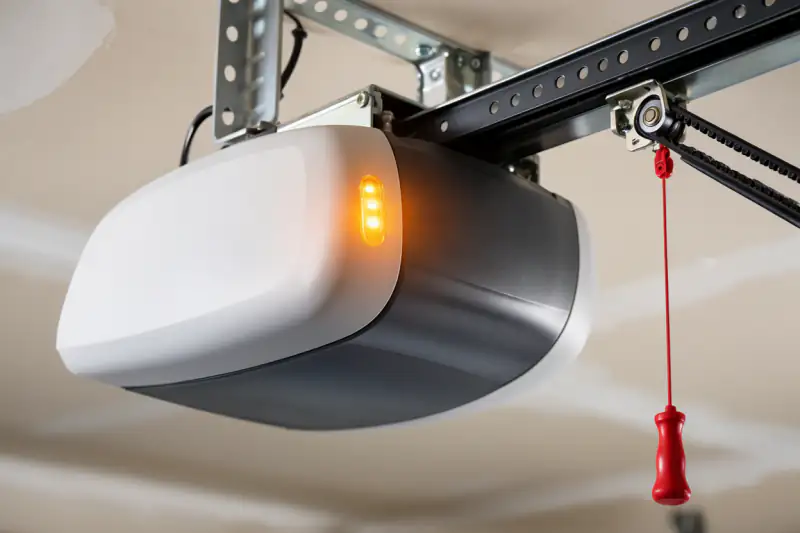
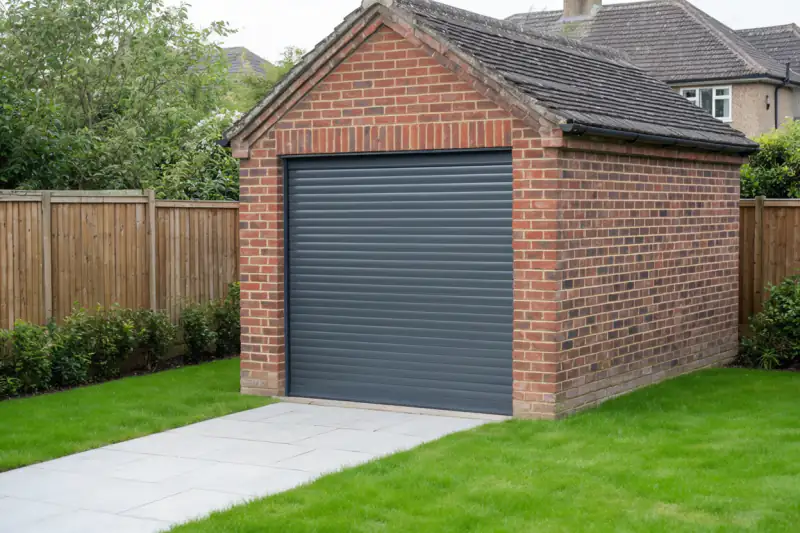
We add motors to existing garage doors, fit new electric doors, replace remotes and repair doors across Whitley Bay. Many interwar homes in the town and in Monkseaton have a detached garage at the bottom of the garden, sometimes with no electricity at all. So before we talk about doors, we find out whether there is power.
Our way of working on a garage with no power
The jobs we take on in Whitley Bay include openers for sound up-and-over doors, new roller, sectional and side-hinged doors with motors, matched replacement remotes and repairs to doors that have stopped working.
Starting the conversation
Use the quote form at the top of this page or email info@remotegaragedoor.co.uk. Tell us whether the garage has a socket or a working light, how far it is from the house and what door it has now. Photos of the door from outside, the inside above the opening and the route between the house and the garage help most. From these we can say whether the door could take a motor and roughly where that motor would sit.
The order things happen in
Your written quote covers the door or opener and the remotes. If a supply is needed, a qualified electrician installs it, as that part is not our work. We agree the motor position with you first so the socket goes in the right place. We then fit the motor or door, test the force limits and obstacle detection, pair the remotes and check them from where you will press them. Before we leave, we show you the manual release and talk through how you would get in during a power cut.
Does your garage have power already?
A socket inside the garage, or a light that works, means a supply is probably there already, though it may need extending to the motor position. If you find nothing, look along the house wall and the garden boundary for any sign of an old cable, then ask a qualified electrician to check it. A disused supply should never be brought back into use without being tested first.
Getting mains to a rear garage
The work depends on the distance and what lies between the two buildings, as a long run under a patio is a different job from a short one along a wall. You may want a light and a spare socket while the electrician is there.
What about solar or low-voltage openers?
Some low-voltage and solar options exist, and they can help where mains would be very difficult. For most people, mains is generally more dependable, because a panel and battery have to keep up through dark North East winters.
Motor on the old door, or a new one?
If the existing up-and-over door is sound, automation is usually the cheapest route to remote control. Lift it by hand first. If it moves evenly without sticking or dropping, it is a good candidate.
If you are replacing it, the space in front decides a lot. A roller door lifts straight up and needs no room outside, which helps where the approach to a Whitley Bay rear garage is narrow, and it keeps the ceiling free in a small building. A side-hinged door can suit the look of an older Whitley Bay home and leaves the roof space clear, but each leaf needs room to swing. A sectional door seals well and suits a garage used as a workshop, as long as the ceiling is clear for its tracks.
Is there another way in if the power fails?
This matters more on a detached garage than on any other kind. Many rear garages in Monkseaton and Whitley Bay have just the one door. In that case an internal manual release is no help when you are standing outside during a power cut, and the same goes for lane garages down the coast in North Shields that have no side door.
An external release lets you disconnect the door from outside, though it must be kept secure. A battery backup keeps the door working for a time, at a typical UK guide figure of £50 to £120. A side door, if your garage has one, also gives you a way to the internal release. Our guide to safety and power cuts explains how the release works.
Remotes for a garage at the bottom of the garden
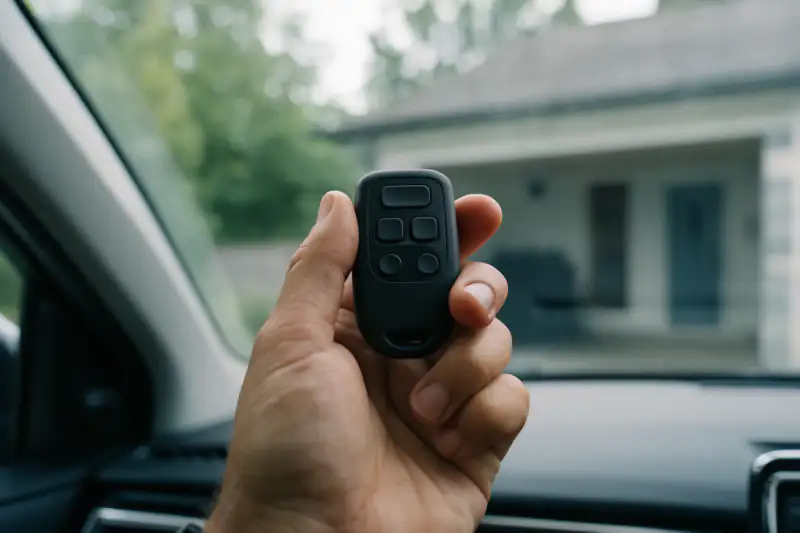
Buildings and walls reduce how far a handset reaches, so range is the thing to think about with a rear garage. A lost handset should be removed from the receiver, because the garage is out of sight from the house, and we can pair a replacement remote at the same time.
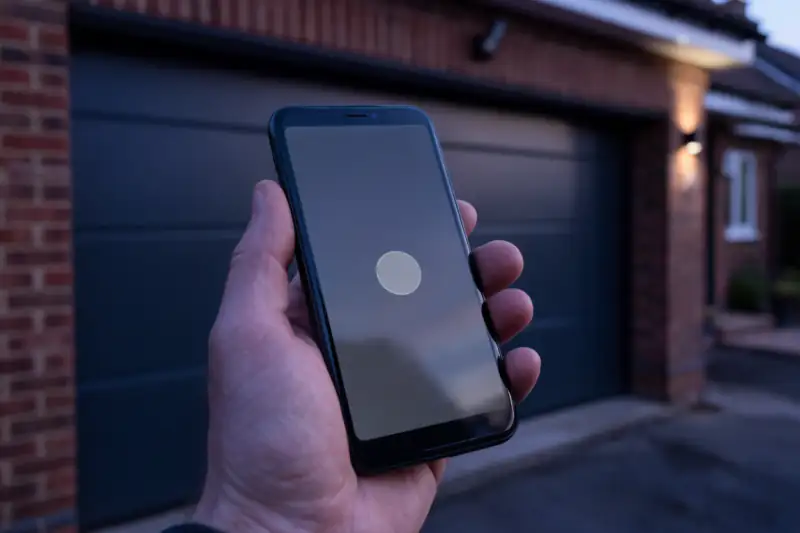
Phone control works if Wi-Fi reaches the garage, and that is often the sticking point in Whitley Bay gardens. Stand by the garage and check the signal before you buy a smart module, typically £30 to £60 as a UK guide figure. Your remotes and wall button carry on working if the Wi-Fi drops.
Salt air and doors that have failed
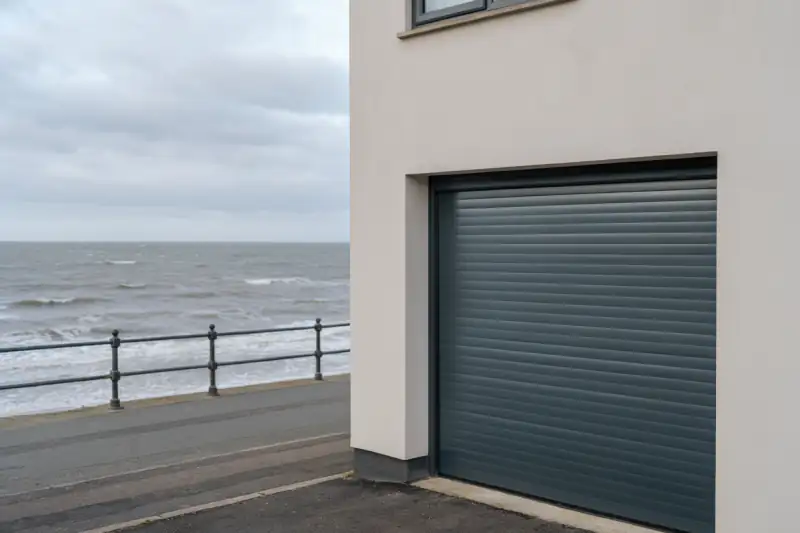
Close to the Whitley Bay seafront, salt air speeds up corrosion on steel, so a durable finish helps and so does rinsing the door now and then. Corroded tracks can make a door stiff, and a stiff door is a common reason an opener starts to reverse or stop. Further inland it is less of a concern.
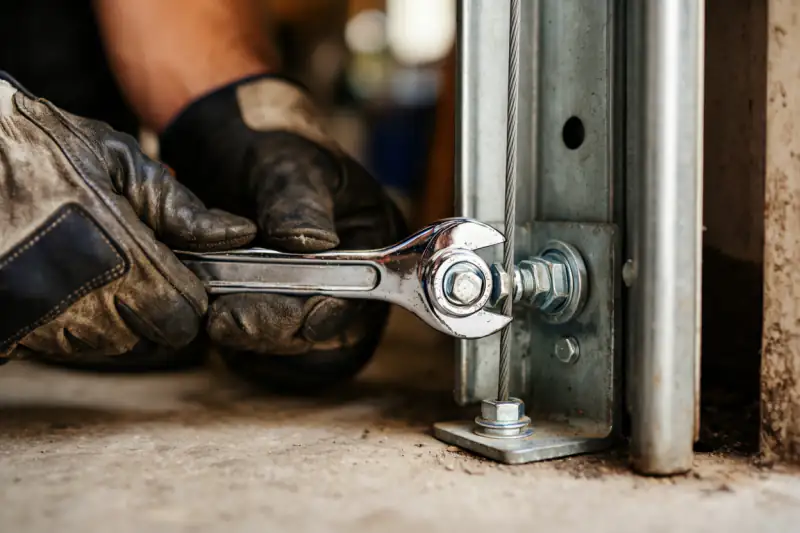
If a door has stopped working, tell us what it did before it failed so we can arrange a repair. If it dropped, went crooked or made a loud bang, stop using it, because springs and cables are under high tension and are not a DIY job.
What does a rear garage conversion typically cost?
Automating an existing up-and-over door is typically £300 to £600 fitted, as a 2026 UK guide figure for a single garage. A new electric roller door is £900 to £2,000, a sectional is £1,200 to £3,000 and a side-hinged door is £1,500 to £3,500. These are guide figures and not our price list.
The supply is a separate cost. A straightforward socket is typically £80 to £150, but a new supply to a detached building is a larger job, so ask the electrician for a price based on your garden. See our price guide for more detail.
Monkseaton, Earsdon, Shiremoor and Backworth
We cover the whole of Whitley Bay and these neighbouring areas, and the garages change as you head inland. Homes on newer developments towards Shiremoor tend to have integral garages, where power is usually close and noise is the main question. A belt-drive opener, at a typical guide figure of £350 to £550 for the motor, runs more quietly if a bedroom sits above the door.
If you have a rear garage in Whitley Bay, or an integral garage nearby, the quote form at the top of this page is the place to start. Tell us if there is power, what door you have now and how far the garage is from the house. We can then explain the sensible next step, even if that step is speaking to an electrician first.