In a power cut, you can usually open an electric garage door by pulling the manual release, then lifting the door by hand. Do this with the door closed if you can, and keep everyone clear. The rest of the time, the door protects you with force limits and obstacle detection, provided they are working, so it helps to know how to check them safely and when to stop and ask for help.
How the safety features protect you
An electric door should stop or reverse if something gets in its way. BS EN 13241 covers domestic door safety, including force limits and obstacle detection. These are the two main protections, and they do slightly different jobs.
Force limits and obstacle detection
The opener watches for resistance as the door moves. If the door meets something, it should stop or reverse instead of pushing on. This relies on the opener being set up correctly for that particular door, which is why those settings should be tested at installation.
Photocells
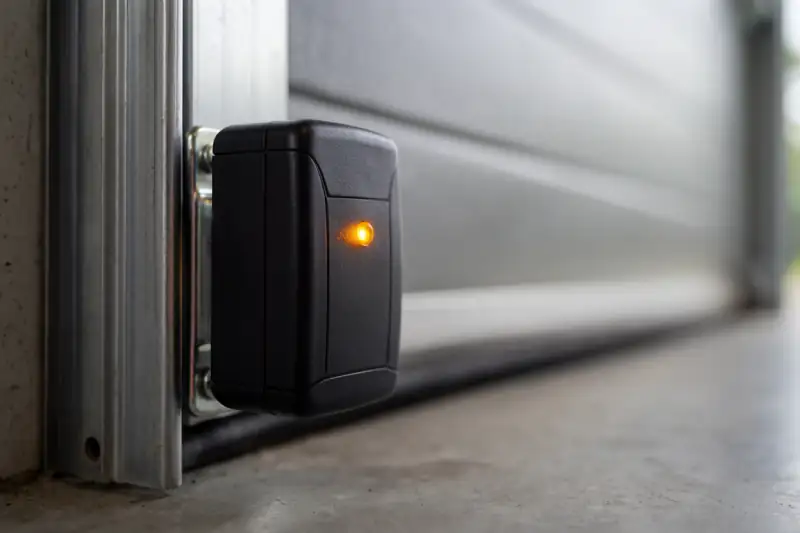
Photocells are small sensors on either side of the opening, and they send a beam across it. If something breaks the beam while the door is closing, the door should stop or reverse before it touches anything. Not every door has them, so look for a pair of small units low down near the frame.
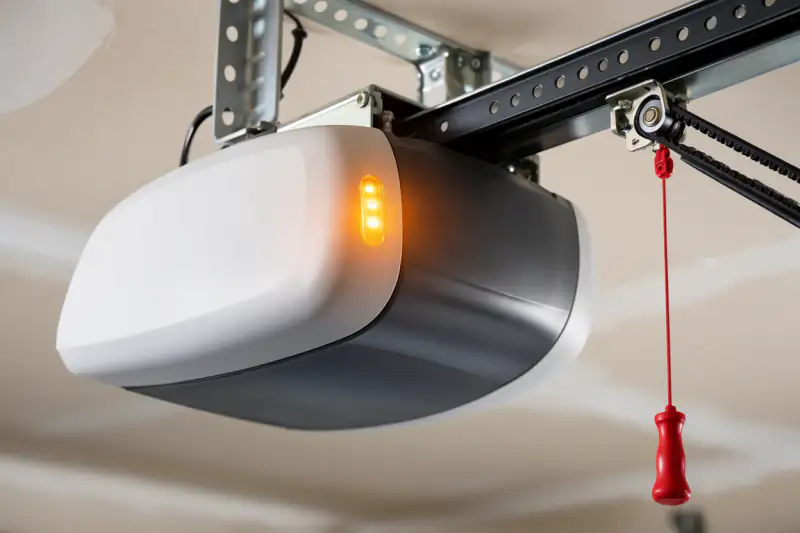
How to use the manual release in a power cut
The manual release disconnects the door from the motor, so you can move it by hand. It is usually a cord or lever, often red, and you should find yours before you ever need it. Follow the instructions for your own opener, as designs vary.
- Check that the door is fully closed if possible, and move people and pets away from it.
- Pull the cord or lever as your manual describes.
- Lift the door slowly by hand, keeping it under control the whole way.
- Stay clear of the opening, and do not walk under the door until it is fully open and stable.
A partly open door needs far more care, because it can fall if its springs are weak. If the power fails with the door part of the way up, keep everyone clear. The safest choice is often to wait for the power to return. Never release a door while someone is underneath it.
A balanced door should lift without a great struggle. If it feels very heavy, stop and do not force it, because a spring may have failed. Lifting a door like that can put your back at risk, and it could drop without warning.
What if the garage is your only way in?
Without a second door, you cannot reach an internal release from outside. If that is your situation, plan for it now and not during a power cut. An external release lets you disconnect the door from outside, and a battery backup can keep the door running while the mains is off.
Battery backup typically costs about £50 to £120 as a 2026 UK guide figure. Both options are easier to arrange in advance, so raise them when you look at garage door automation. If the car lives in the garage, think now about how you would get it out.
What to do when the power comes back
Reconnect the door to the motor by following your manual, because the method differs between makes. Many openers reconnect when the motor next runs, while others need the lever moving back by hand. Until it is reconnected, the motor is not holding the door shut, so do not leave it that way overnight.
Once the door is reconnected, stand back and run it through a full cycle. Watch how it moves and listen for anything unusual. If the remote no longer works afterwards, our guide to garage door remote problems can help you work out why.
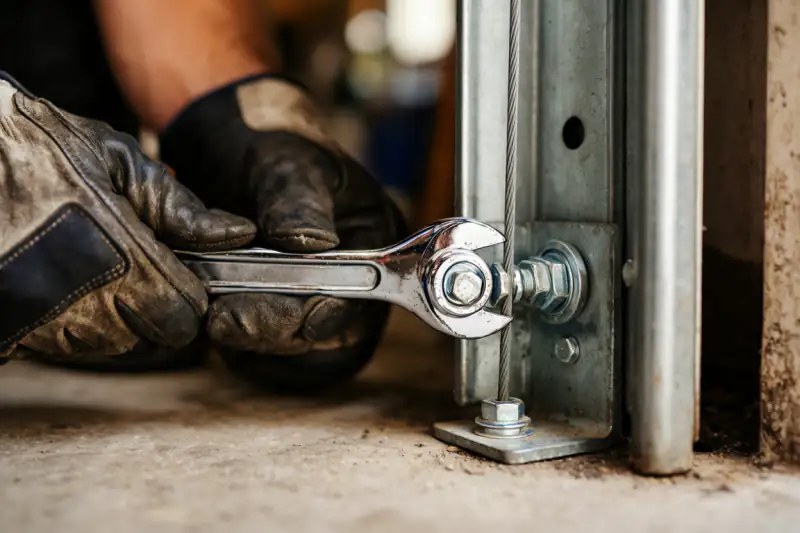
Simple monthly checks
A short check once a month will tell you if the safety features are still doing their job. We go through the same tests when we hand over a newly installed electric garage door. Only do these if the door is otherwise running normally, and follow your manual for each test.
- Look over the door for damage, frayed cables or loose fixings, without touching the springs or cables.
- Test the obstacle detection by placing a solid object in the door's path, as your manual describes. The door should stop or reverse when it meets it.
- Pass an object through the photocell beam as the door closes, keeping your hands and body out of the door's path.
- Listen for jerky movement or any noise that is new.
Never use your hand, foot or body as the test object. If the door does not react as it should, stop using it. Clean the photocell lenses gently and check that they still face each other. If that does not cure it, ask for the door to be looked at.
Warning signs that mean stop using the door
Some faults should end your use of the door straight away. Stop using it if it has made a loud bang, has dropped, hangs crooked or will not lift. Do the same if a cable looks slack or has come away from its drum.
Do not try to force the door, and do not run the motor to see if it clears. Driving a damaged door can make the fault worse, and it can bring a heavy door down. Keep people away from it, and ask for a garage door repair.
Springs and cables are not DIY jobs
Please leave these alone, even if the fix looks simple. Springs and cables hold the weight of the door under high tension, and a sudden release can cause serious injury. Do not adjust, loosen, tighten or replace them, and do not try to rethread a cable. However handy you are, the risk is still there with the door closed.
Electrical work has the same limit. Leave the inside of the motor alone, and use a qualified electrician for any new electrical supply.
Keeping children and visitors safe
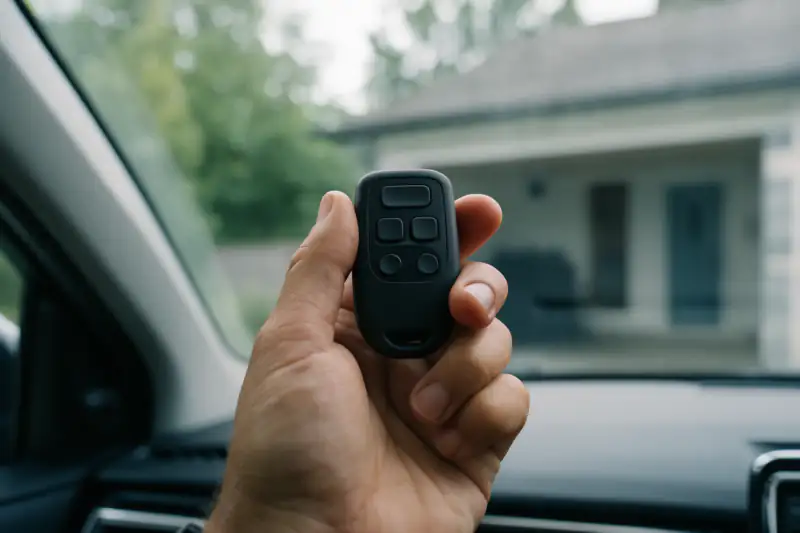
Most day-to-day safety comes down to a few household rules. Keep remotes away from children, and mount any wall button well out of their reach. Teach them that the door is not a toy, and that nobody runs under a moving door.
Keep the door in sight whenever you close it, and wait until it has stopped before you drive away. This matters even more with smart control, because a door that can be closed from somewhere else relies completely on its safety sensors. Make sure everyone who uses the garage knows where the manual release is.
If you are unsure about any part of your door, it is far better to ask than to test your luck. Use the quote form at the top of this page to tell us what you have noticed. Include a photo if you can take one safely. If you think something is wrong, please stop using the door until it has been checked.