The most likely cause is a flat battery. After that, the usual suspects are a lock mode on the wall panel, radio interference, a lost pairing or a failed receiver. A few minutes of checking will usually tell you which one you are dealing with, and most of it needs no tools. Start with the first check below, because it splits the problem in two and saves you from replacing the wrong part.
Start with the wall button
Press the wall button inside the garage, or try a second remote if you have one. If the door moves, the motor and door are fine, and the fault lies with the handset or the radio link. If nothing happens, the opener may have no power.
In that case, check that the socket is switched on and that the fuse board has not tripped. A plug that has worked loose is an easy thing to miss. If the opener has power and the wall button still does nothing, skip ahead to the section on the receiver.
Why does one remote work and not the other?
If one handset works and the other does not, the opener is fine and the problem is in the dead handset. That almost always means a battery, a lost pairing or a broken remote. If every remote stopped at the same moment, look at the opener end instead. A lock mode or a receiver problem is more likely.
Check the battery first
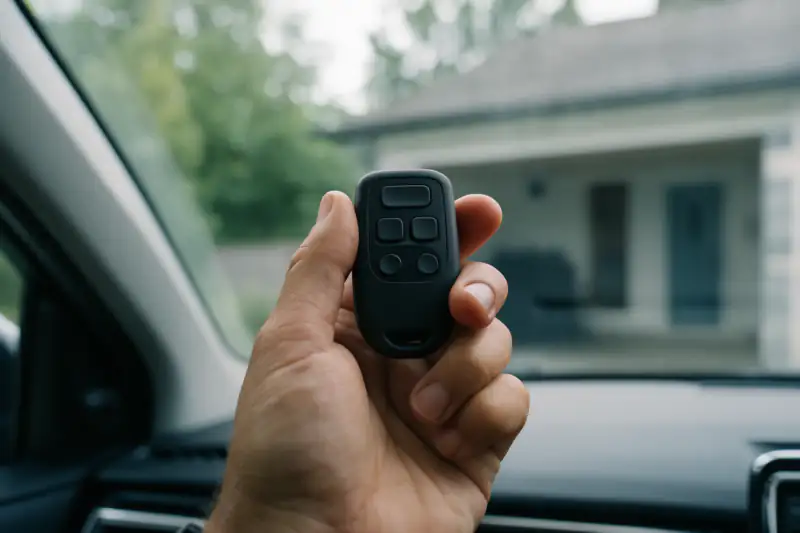
Replacing the battery is the most common fix of all. Open the handset and check the type marked inside, then fit a fresh one the right way round. Look for the small LED when you press the button. If it stays dark with a new battery, the contacts may be dirty or the handset may have failed.
A weak battery often gives a warning first. You may have had to press the button several times, or get closer to the door before it would respond.
What if the remote only works close to the door?
Short range usually points to a weak battery or radio interference. Once you have ruled out the battery, look for anything new near the opener. LED bulbs can cause radio interference, and a bulb in the opener itself or close to it is a known culprit.
To test this, switch off nearby lights and try the remote again. If the range comes back, the bulb is the likely cause, and a different bulb may cure it. Walls and buildings also reduce range, so it is normal for a remote to struggle at the far end of a long drive. On some systems, an external receiver aerial can help with this.
Other simple causes to rule out
A few other faults can look like a dead remote when the handset is actually fine, and each one is quick to check.
Lock mode on the wall panel
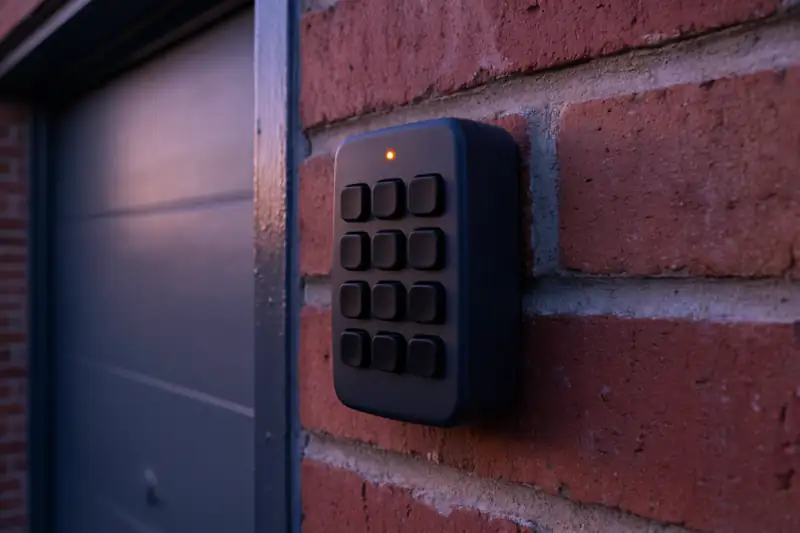
Some wall panels have a lock or vacation switch that disables the remotes. It is easy to press by accident, particularly when you are reaching past it with your hands full. Check your manual for the symbol, and turn it off if it is on.
The door moves, then goes back up
If the door starts to close and then reverses, the remote is doing its job. The opener has detected an obstruction, so check that nothing is in the opening. Then clean the photocells and make sure they face each other.
The manual release has been pulled
If the motor runs but the door stays put, the release may have been disengaged, perhaps during a power cut. Our safety and power cut guide explains how the release works. If in doubt, follow your manual and do not force anything.
Can you re-pair the remote yourself?
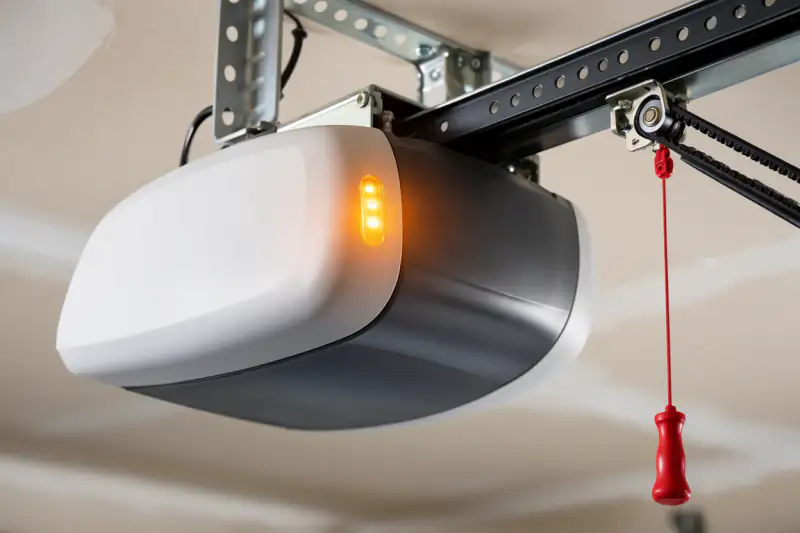
You can often re-pair a remote yourself, since many openers have a learn button on the motor. Press it, then press the handset within the time your manual gives. The steps vary by make, so follow the instructions for your model. Pairing is also how a rolling-code opener shuts out handsets it does not know, which our guide on how well electric garage doors resist break-ins covers in more depth.
The button is usually on the motor unit, so you may need steps to reach it. Take care working at height, and keep your hands away from the door's springs and cables. Those are not part of this job in any case, and they are dangerous to touch.
Buying a replacement remote
Do not buy a replacement on looks alone, because two remotes can look identical and still be incompatible. A handset must match the frequency of the receiver, usually 433 MHz or 868 MHz, and its coding type.
The make and model on the motor label will tell you most of what you need. Older fixed-code systems can often be copied by a cloning remote. Modern rolling-code systems change the code on every press, so a new handset has to be paired with the receiver itself.
If the remote you need is no longer made, a new receiver can often be added to the existing motor. That is usually far better than replacing a working opener. Our remote replacement service covers matching and pairing, and we can remove lost handsets from the system too. If a handset has gone missing altogether, clear it from the receiver so it can no longer open your door.
When the fault is the receiver or control board
If a fresh battery and re-pairing change nothing, and the wall button has also stopped working, the receiver or control board may have failed. This is the point to stop testing and get the opener looked at. Opening the motor casing is not a good idea, because it contains mains electricity.
Age comes into it as well. If the opener is old and the parts are hard to find, it may be better to replace it than to keep repairing it. Our repairs page lists the faults we deal with, and we will give you both options where that is useful.
Most of the time, one of these checks will get your door moving again without spending more than the cost of a battery. If it does not, use the quote form at the top of this page. Tell us the make and model on the motor label and what you have already tried. A photo of the handset helps us identify your system more quickly.